
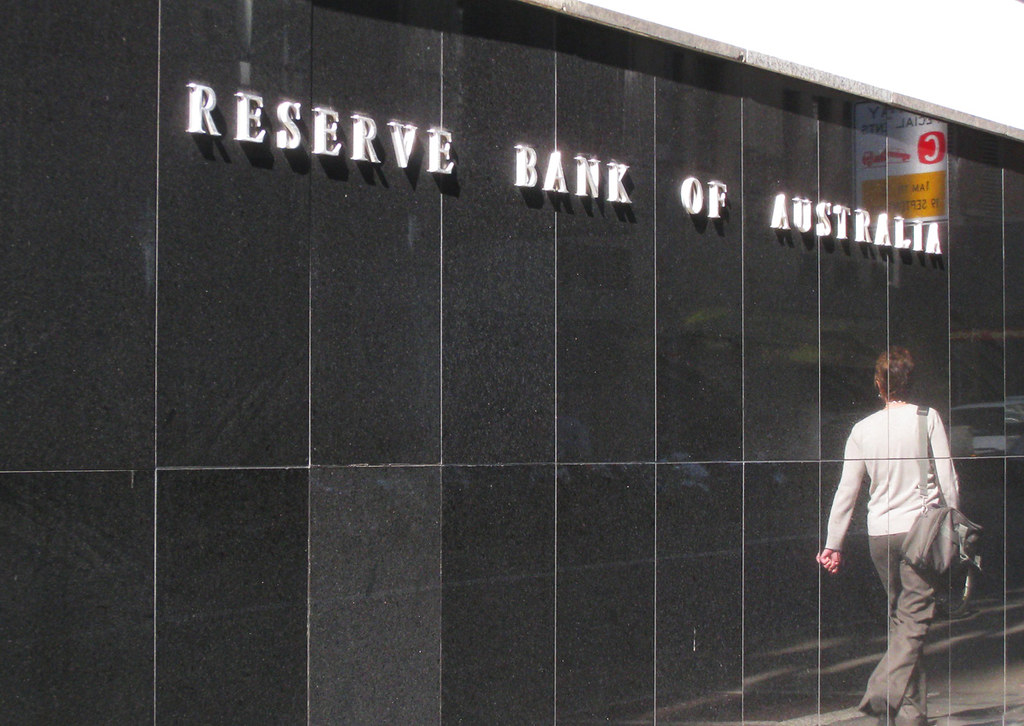
The RBA holds at 4.35 per cent
On 11 August 2026 the Reserve Bank of Australia's Monetary Policy Board left the cash rate target unchanged at 4.35 per cent, in line with market expectations. It was a unanimous decision, and the second consecutive hold following the July 2026 meeting — a pause that comes after three rate rises were front-loaded into the first half of 2026.
For anyone with a variable-rate mortgage, the practical effect is that minimum monthly repayments do not rise again this cycle. The Board's language, however, was not neutral. The statement reiterated that headline inflation is still too high, that trimmed mean inflation remains elevated and little changed from the March quarter, and that some firms facing cost pressures are lifting prices or looking to do so. Governor Michele Bullock told a post-decision press conference that the Board "remains concerned" about the inflation outlook and would raise rates further if required.
Why the RBA is now watching housing closely
The statement made housing explicit: momentum in the housing market has shifted, with prices falling in some capital cities and new housing loans declining noticeably. The RBA does not target house prices, but a weaker housing market feeds through to construction, renovation and household spending — part of the slowdown the Board says it needs. Labour market conditions have also eased by a little more than expected, with unemployment at 4.4 per cent.
What it means if you're buying in Sydney
The bigger constraint for Sydney buyers is not the monthly repayment — it is the loan size lenders will approve. Each 25 basis point increase cuts the maximum borrowing capacity of an average income earner by roughly $12,000, so this year's three rises have stripped about $36,000 from a single-income buyer at average wages and around $72,000 from a dual-income couple. Domain frames the same shift as a 7 to 8 per cent fall in overall borrowing capacity.
On an average loan of about $736,000, each 25 basis point rise adds roughly $120 a month, meaning many borrowers are carrying an extra $360 a month compared with the start of 2026.
Two consequences are already visible in Sydney. Buyers are competing hardest at lower price points — Cotality data shows Sydney's lower quartile values rising while the upper quartile has fallen for five consecutive months. And demand is rotating from houses to units, with Domain forecasting Sydney units to outperform houses by about four percentage points as the house-to-unit price premium (a record 111 per cent) compresses.
Where Sydney values actually sit
Sydney dwelling values fell 1.2 per cent in June 2026 and 3.2 per cent over the June quarter, leaving annual growth at just 0.3 per cent and the median dwelling value at $1,265,608 — about 3.7 per cent below the record high set in January 2026, according to Cotality. Units have held up better than houses, with the median unit value at $898,623 and a quarterly fall of 1.8 per cent against 3.8 per cent for houses.
But the city-wide median hides a genuinely two-speed market.
Data to April 2026
Affordable outer-west markets have gained while parts of the prestige market have softened.
The timelines that matter
The Board does not expect inflation back to around the midpoint of its 2–3 per cent target range until late 2027, and flagged upside risks to that date. Underlying inflation is forecast to stay above 3 per cent until mid-2027 before easing to 2.4 per cent in 2028. Unemployment is expected to reach 4.5 per cent by December 2026 and 4.8 per cent by June 2028.
On the RBA's own numbers, rate relief is a 2027 story — and the major banks disagree on the direction of the next move.
| NAB | Cuts from June 2027 | 3.6% |
| ANZ | Cuts from September 2027 | 3.9% |
| CBA | Cuts from May 2027 | 3.9% |
| Westpac | Two further rises | 4.9% |
Forecasts as published ahead of the 11 August 2026 decision; the August meeting was a hold. Forecasts change.
ANZ Research currently has Sydney house prices falling 0.7 per cent across 2026 before recovering to 2.6 per cent growth in 2027.
What we're telling clients
- Buyers: less competition at the top end and more stock on market means more room to negotiate than at any point in the past three years. Get a current written pre-approval — a figure from early 2026 is probably out of date.
- Sellers: pricing to the market as it is in August 2026, not to January 2026 peak comparables, is what is getting deals done. Well-presented family homes with schools and transport nearby are still transacting.
- Investors: yields are stronger in Sydney's west than in the prestige belt, but lenders have also been trimming maximum investor loan sizes, so check your capacity before you commit.
This article is general information only and does not take your circumstances into account. Speak to a licensed mortgage broker or financial adviser before making a borrowing decision.